tempestade, escultura e cão lindo
\
storm, sculpture and beautiful dog


tempestade, escultura e cão lindo
\
storm, sculpture and beautiful dog


work in progressinho
.
Lápis de cor sobre oapel kraft.
Coloured pencil on kraft paper.
turno da noite
Ora veio de quartzo, ora “a vida é uma brecha na não existência”.
Lápis de cor sobre papel kraft.
\
night shift
Sometimes quartz vein, sometimes “life is a gap in non-existence”.
Coloured pencil on kraft paper.


[EN below]
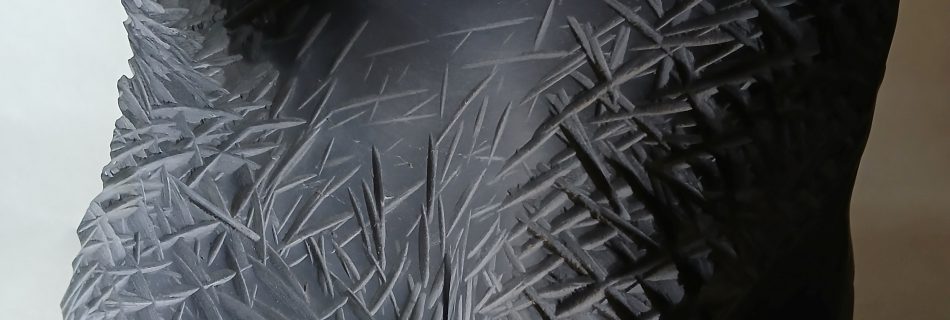
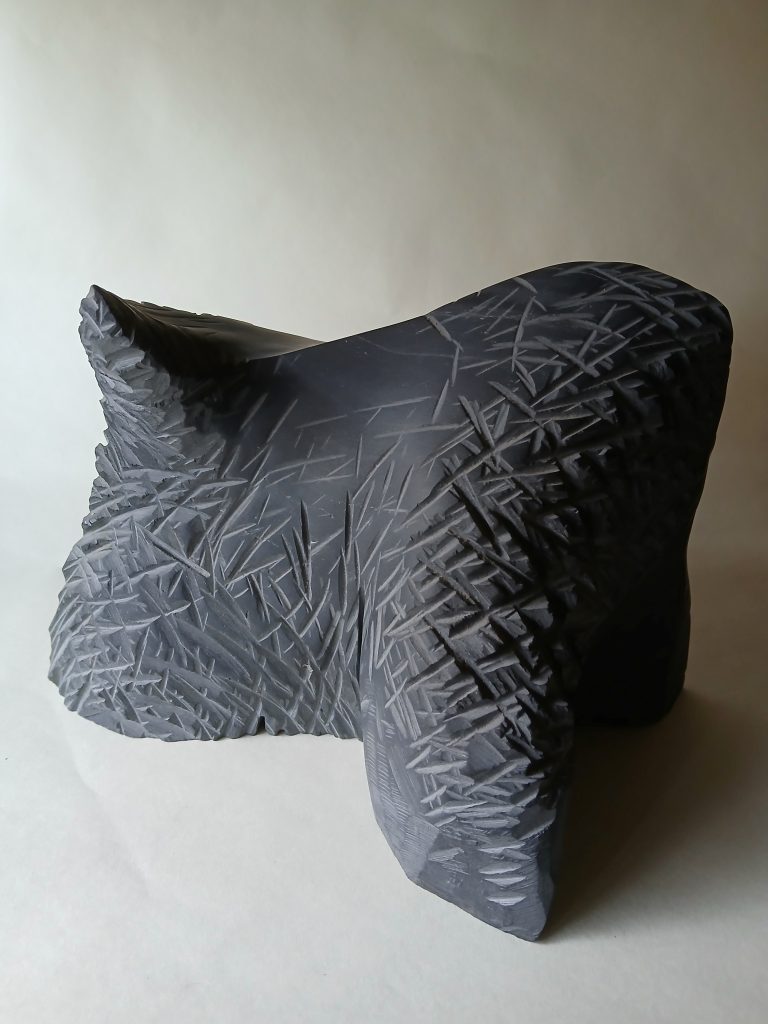
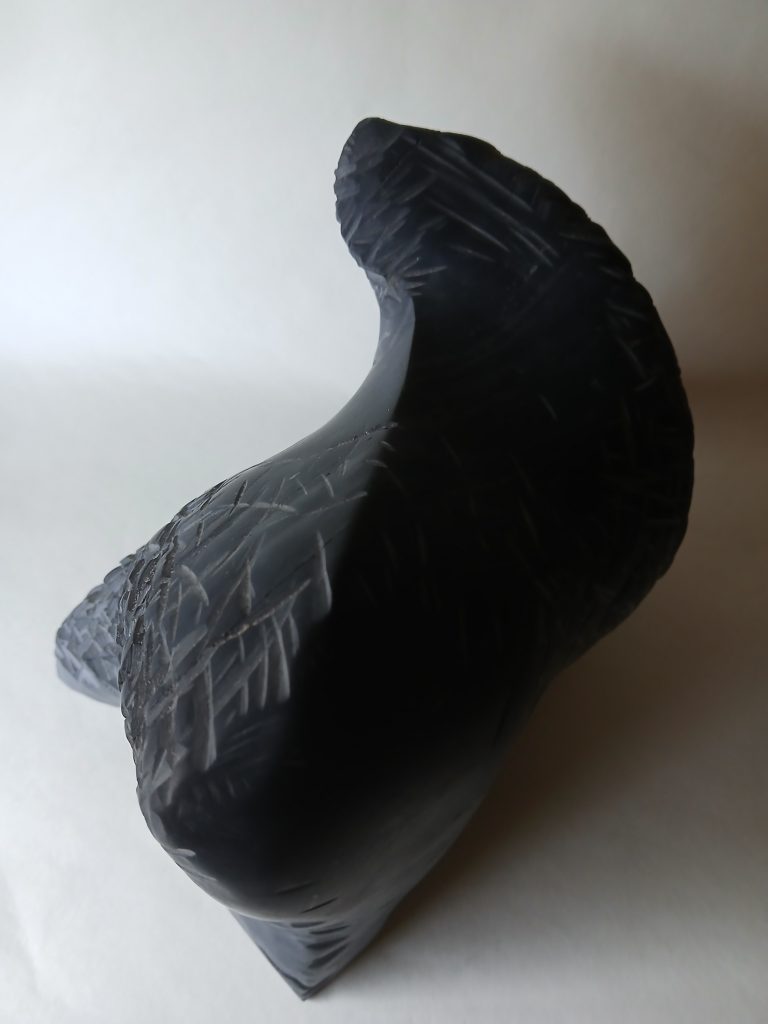
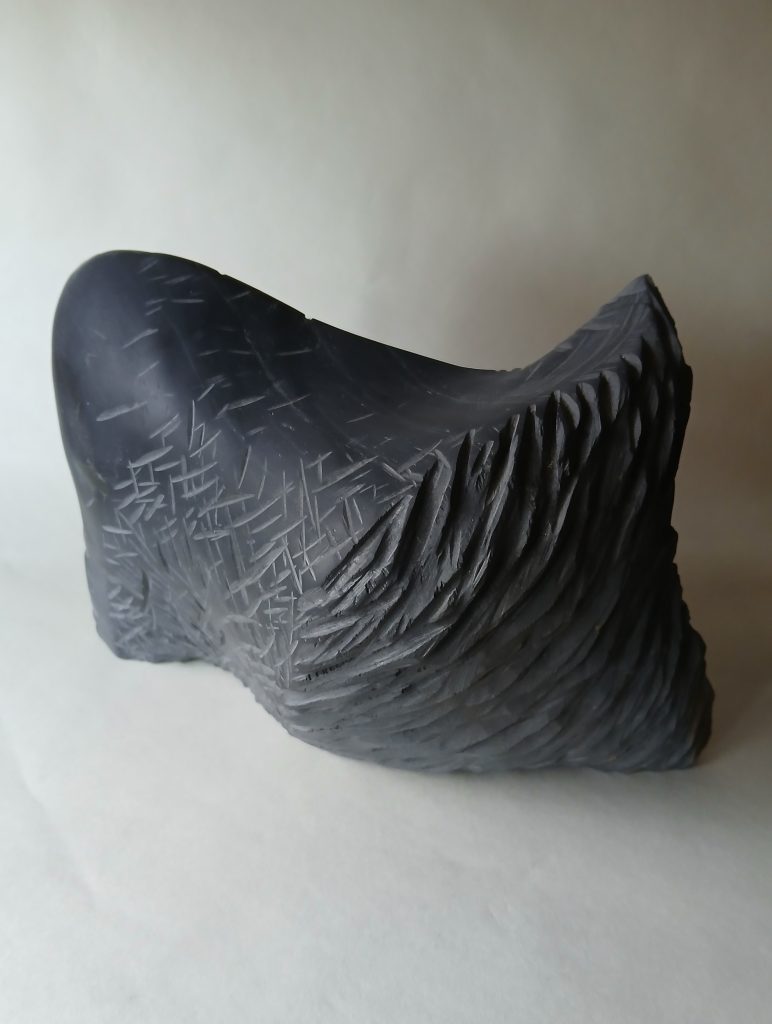
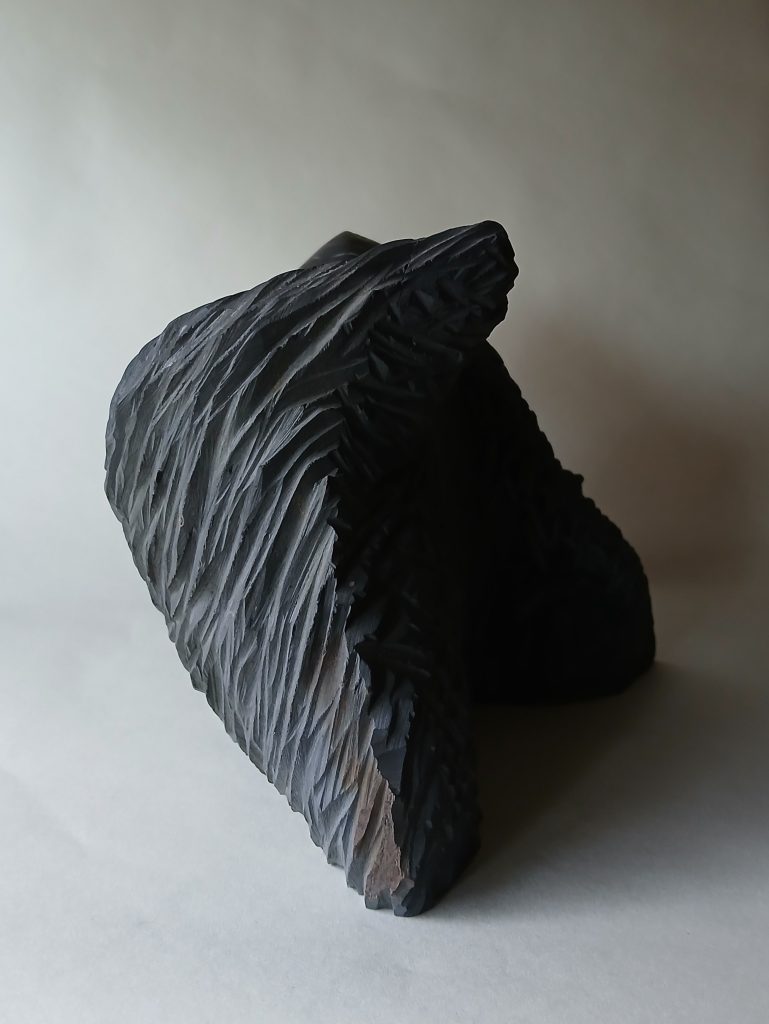
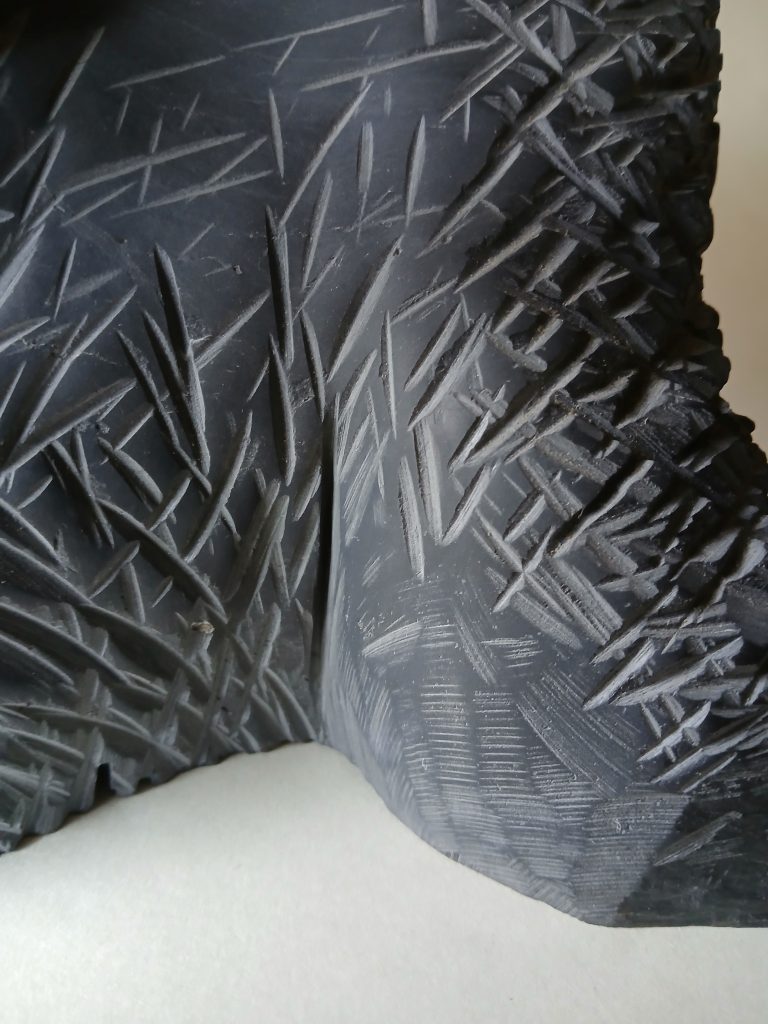
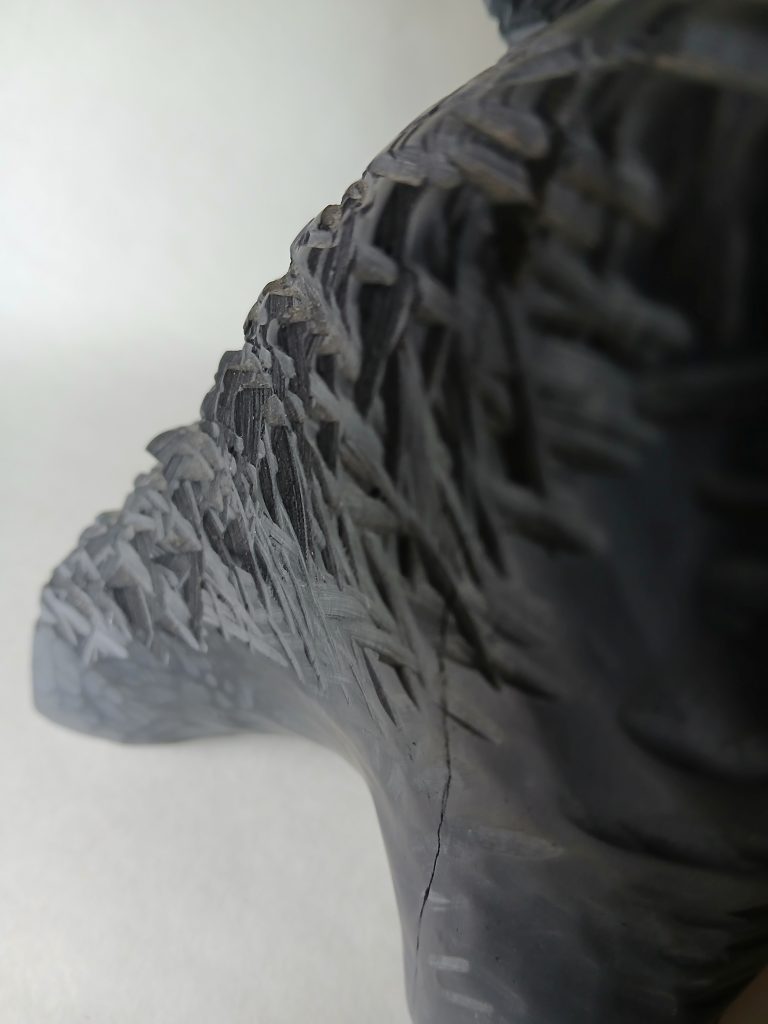
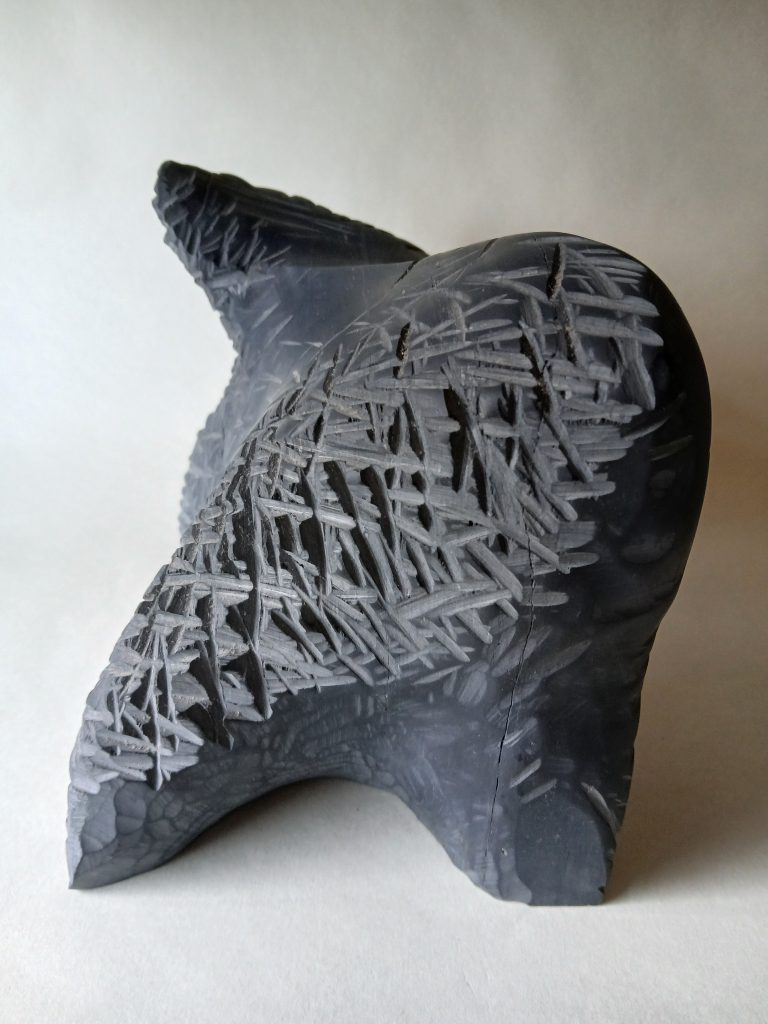
Em julho de 2022 terminei uma pequena escultura em lousa de Valongo. Queria muito trabalhar nesta pedra mas ela é realmente difícil, reage com dramatismo às minhas aproximações, desfaz-se em lascas por menos de nada. Essa pequena escultura partiu nos últimos movimentos da lixa. É a escultura, colada, das fotos.
Fiquei descoroçoada.
Eu desejava ver formas a surgir daqueles bloquinhos escuros. Não queria trabalhar acerca da fragilidade do material. Queria, sim, trabalhar em diálogo com o material, incluindo a sua fragilidade.
Passaram 3 anos. Tentei abordar esta vontade de trabalhar com a lousa de Valongo a partir de várias perspectivas diferentes. Persistiu a ideia inicial – quero, preciso de ver surgir formas a partir daqueles blocos escuros. Animais com presença e corpo, pré-verbais.
Durante grande parte destes 3 anos, o meu carro carregou blocos de lousa de Valongo na mala. A chocalhar e a estremecer, isto é, a fragilizar ainda mais a sua estrutura, a soltar ainda mais as camadas. Não foi propositado, apenas não tive como os trabalhar e também não me sentia pronta. Andava com os blocos porque andava com o desejo de os trabalhar e porque não tinha outro local onde pudesse estar com eles, ouvi-los e senti-los meus.
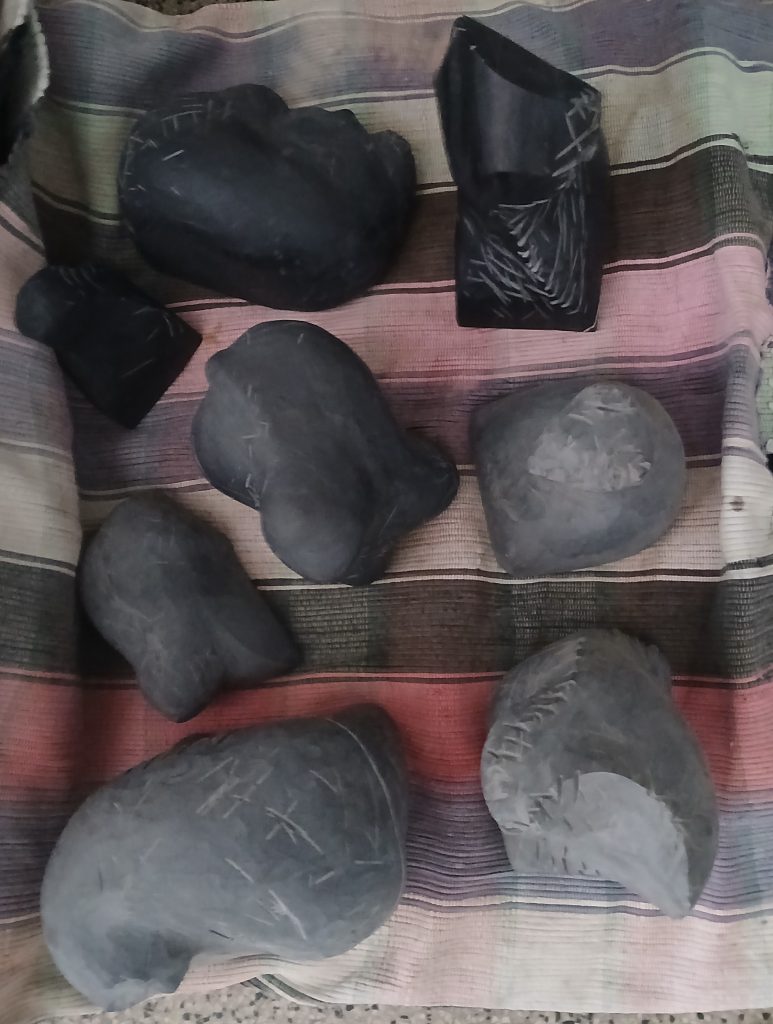
E neste verão, em arrebatamento, passei 12 dias a trabalhar com os bloquinhos escuros, frágeis e lindos. Percebi, ao trabalhar, que tínhamos encontrado uma solução, um diálogo radical.
Última foto com as peças de agosto, ainda não terminadas.
\
radical dialogue
In July 2022, I finished a small sculpture on Valongo gray-blue slate. I really wanted to work on this stone, but it’s really difficult, it reacts dramatically to my approaches, and it crumbles into shards in no time. That small sculpture broke during the last strokes of the sandpaper. It’s the sculpture, glued, in the photos.
I was discouraged.
I wanted to see shapes emerging from those dark blocks. I didn’t want to work on the fragility of the material. I wanted to work in dialogue with the material, including its fragility.
Three years passed. I tried to approach this desire to work with the Valongo slate from several different perspectives. The initial idea persisted – I want, I need to see shapes emerge from those dark blocks. Animals with presence and body, pre-verbal.
For much of those three years, my car carried Valongo slate blocks in its bag. Colliding and shaking, that is, further weakening their structure, loosening the layers even more. It wasn’t intentional; I just couldn’t work with them, and I also didn’t feel ready. I carried the blocks because I wanted to work with them and because I had no other place to be with them, hear them, and feel them as mine.
And this summer, in rapture, I spent 12 days working with the dark, fragile, and beautiful blocks. I realized, as I worked, that we had found a solution, a radical dialogue.
Last photo with the August pieces, not yet finished.


at body scale
The final form of the sculpture is a testimony of the process that generated it. Involvement of the body, discovery, the passing of time. Even when the scale increases, even when there is an initial idea for the final form, there is always a dialogue between me and the material, mediated by the tools I use.
\
à medida do corpo
A forma final da escultura é um testemunho do processo que a gerou. Envolvimento do corpo, descoberta, passar do tempo. Mesmo quando a escala aumenta, mesma quando há uma ideia inicial para a forma final, existe sempre o diálogo entre mim e o material, mediado pelas ferramentas que utilizo.


[PT abaixo]
this is not Lethes
The Romans believed that the River Lima (north of Portugal) was the Lethes, the river of forgetfulness, and refused to cross it until the centurion Decimus Junius Brutus crossed it and called each of his men by name from the other bank, thus proving that he had not lost his memory.
I’m working from this episode, covering areas of paper with layers of coloured pencils, as I reflect on fear, courage, and crossing over. It is a work composed of several drawings and the first one is in image 2. In the third image I show the process of delimiting the color areas with adhesive tape.
\
este não é o Lethes
Os romanos acreditavam que o Rio Lima era o Lethes, o rio do esquecimento, e recusavam-se a atravessá-lo até o centurião Decimus Junius Brutus o ter atravessado e ter chamado da outra margem cada um dos seus homens pelo nome, provando assim que não perdera a memória.
Estou a trabalhar a partir deste episódio, cobrindo áreas de papel com camadas de lápis de cor, enquanto reflicto sobre o medo, a coragem e as travessias. É uma obra composta por vários desenhos. Numa das imagens mostro o processo de delimitar as áreas de cor com fita cola.


Some details before giving the wood its final treatment and attaching the piece to the base – a commissioned sculpture made from a pine tree trunk.
It was very exciting to make this piece, due to its size, the demands of working with resinous wood and the challenge of making the most of the shapes suggested by such a bifurcated trunk and with so many knots (the last photos show the initial trunk after the bark was removed).
I will soon share photos of the final piece.
\
Alguns pormenores antes de dar o tratamento final à madeira e de fixar a peça à base – uma escultura feita por encomenda a partir de um tronco de pinheiro.
Foi muito emocionante fazer esta peça, pela dimensão, pela exigência que é trabalhar madeira resinosa e pelo desafio de tirar o máximo partido das formas sugeridas por um tronco tão bifurcado e com tantos nós (as últimas fotos mostram o tronco inicial depois de lhe tirar a casca).
Em breve irei partilhar fotos da peça final.


[em português abaixo]
In my collages, the color is often obtained using natural or industrial pigments. At the moment, in addition to color, I am interested in and am labouring around the transparency or opacity of pigments. In the photo – tests with Sennelier’s chromium oxide green (opaque) and phthalocyanine green (transparent).
\
Nas minhas colagens muitas vezes a cor é obtida usando pigmentos naturais ou industriais. Neste momento, para além da cor, estou interessada e ando a laborar à volta da transparência ou opacidade dos pigmentos. Na foto – testes com os verdes óxido de crómio (opaco) e ftalocianina (transparente) da sennelier.
modelitos… some differences in the process of carving wood with or without a commission
[em português abaixo]
When I work on a piece in wood I generally start with a very abstract idea, an imaginary vision that can refer to a shape, an element, or a relationship between parts. Sometimes I resort to some very loose drawings. For a while I sculpt without a detailed plan until I get to know the wood and some shapes begin to emerge. From that moment on, I use drawings to define some aspects and finally finish the piece. In the finished piece I usually recognize both the initial ideas and the details worked through the drawing in the middle of the process.
But in a commission the process is very different. Before starting to work with wood, I make several drawings and some clay models, or maquettes. In the image: some small-scale clay models (modelitos) that help define the shape to be carved in wood.
I do commissions for wood sculptures, please contact me: contacts \ contactos
\
modelitos… algumas diferenças no processo de esculpir madeira com ou sem uma encomenda
Quando trabalho uma peça em madeira geralmente começo com uma ideia muito abstracta, uma visão imaginária que se pode referir a uma forma, um elemento, ou uma relação entre partes. Por vezes, recorro a alguns desenhos muito soltos. Durante algum tempo esculpo sem um plano de pormenor até conhecer a madeira e começarem a surgir algumas formas. A partir desse momento recorro a desenhos para definir alguns aspectos e por fim termino a peça. Na peça terminada reconheço habitualmente quer as ideias iniciais quer os pormenores trabalhados através do desenho a meio do processo.
Mas numa encomenda o processo é muito diferente. Antes de começar a trabalhar na madeira, faço vários desenhos e alguns modelos em barro. Na imagem: alguns modelos de barro a pequena escala (modelitos), ou maquetes, que ajudam a definir a forma a ser esculpida na madeira.
Aceito encomendas de esculturas em madeira, por favor contacte-me: contacts \ contactos